
What Kills Leather Jacket Bugs?

A Manufacturer’s Guide
As leather jacket manufacturers and sellers, we occasionally hear from customers who discover small holes, damaged lining, or signs of insects after storing a jacket for a long time. When this happens, the first question is usually: what kills leather jacket bugs, and how can I protect my jacket?
The term “leather jacket bugs” can refer to several pests. Clothes moth larvae and carpet beetle larvae are among the insects that can damage leather, especially when jackets are dirty, undisturbed, or stored in poor conditions. The Canadian Conservation Institute notes that leather can be vulnerable to insects such as dermestid beetles, while signs of infestation can include holes, grazed surfaces, insect casings, and frass.
It is also important to clarify that the insect commonly called a leather jacket is actually a crane-fly larva found in soil and is not the insect responsible for eating leather clothing. The pests that can affect leather garments are more commonly moths and beetles.
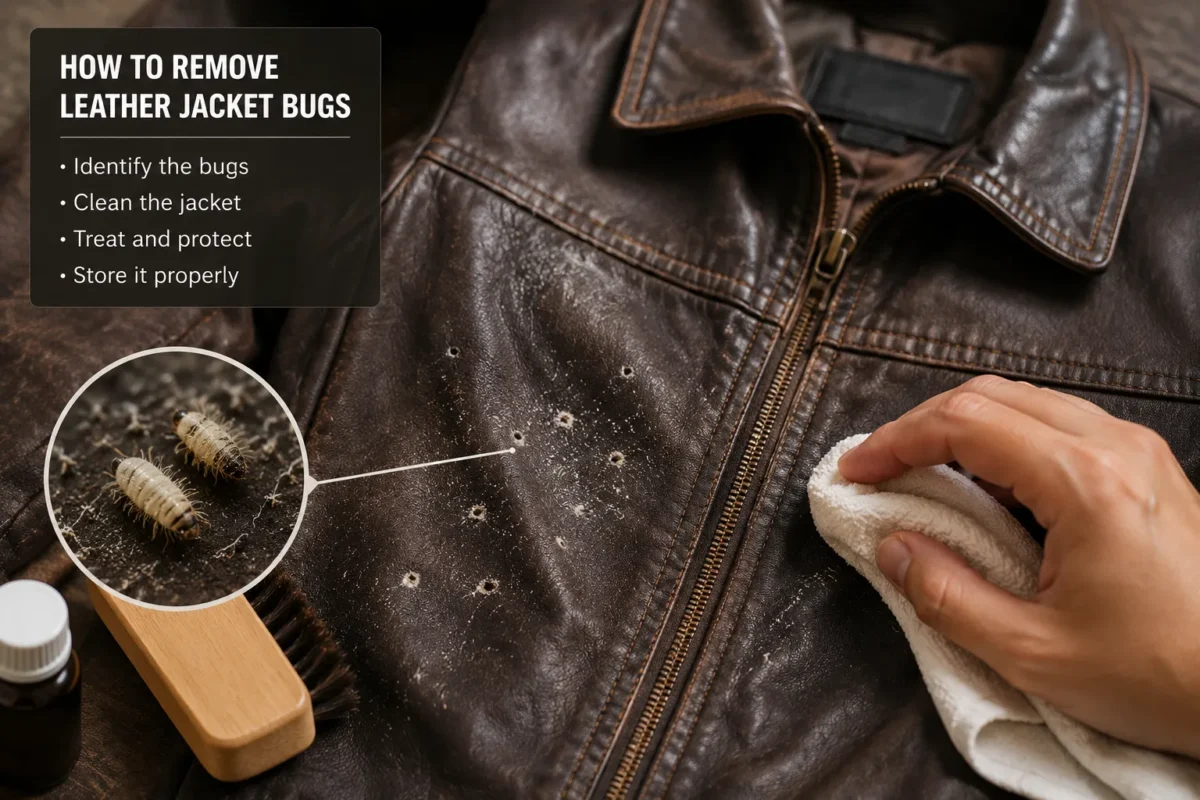
What Attracts Bugs to Leather Jackets?
A leather jacket itself isn’t always the main attraction. Dirt, body oils, food residue, sweat, hair, wool fibers, fur, and other organic materials around a stored jacket can make the environment more attractive to insects. Jackets that remain untouched in dark storage areas for long periods can be particularly vulnerable.
This is why we recommend cleaning and inspecting a leather jacket before putting it away for a season. Regular inspection also helps you discover an infestation before the damage becomes extensive.
How to Kill Bugs and Their Larvae
The right treatment depends on the insect and the material of the jacket. For valuable or heavily infested leather, we recommend consulting a professional leather cleaner or pest-control specialist rather than applying household insecticides directly to the leather.
For smaller suspected infestations, the first step is to isolate the jacket from other clothing. Carefully inspect the seams, pockets, lining, cuffs, collar, and storage area for insects, larvae, eggs, shed skins, or small holes.
Extension guidance recommends thoroughly cleaning storage areas and treating susceptible items appropriately. For small non-washable items, controlled freezing can be effective against clothing moths, but valuable leather garments should be treated cautiously because temperature changes can affect delicate materials.
We don’t recommend putting a leather jacket in a household dryer or exposing it to excessive heat. High temperatures can dry leather, affect its finish, and cause cracking.
Clean the Jacket and Storage Area
If you suspect insects, don’t focus only on the jacket. The surrounding wardrobe or storage area also needs attention.
Remove nearby clothing and inspect other natural-fiber garments. Vacuum cracks, corners, shelves, and floor areas thoroughly, then clean the storage space according to the appropriate pest-control guidance. Clothes moth guidance also recommends identifying infested items and cleaning the surrounding area rather than treating only the visibly affected garment.
After cleaning, inspect your leather jacket carefully. Pay particular attention to:
- Collar and seams
- Inner lining and pockets
- Cuffs and waistband
- Areas with hair, wool, or fur
- Small holes or grazed patches
If you find extensive damage, professional leather repair may be necessary.
Can Cedar Help Protect a Leather Jacket?
Cedar can be useful as part of a broader storage strategy because its scent may help deter moths. However, we don’t recommend relying on cedar alone to control an established infestation.
The most important protection is keeping the jacket clean, inspecting it regularly, and maintaining an appropriate storage environment. Cedar products can be placed in the storage area rather than directly against the leather.
Should You Use Mothballs on a Leather Jacket?
We recommend caution with mothballs. They are pesticides designed for specific enclosed storage situations, and their vapors can be hazardous if used incorrectly. Extension guidance states that mothballs should only be used according to their label and in airtight containers where specified.
For this reason, don’t place mothballs directly inside a leather jacket or leave them loose in your wardrobe. If you’re dealing with an active infestation, follow the product label or contact a pest-control professional.
How to Protect Leather Jackets From Bugs
Prevention is much easier than repairing insect damage. As manufacturers, we recommend giving your leather jackets a little attention before long-term storage.
Clean away dirt and residue, allow the jacket to air completely, and store it in a clean, dry environment. Inspect it periodically rather than leaving it untouched for an entire season.
Good habits include:
- Clean the jacket before long-term storage.
- Inspect seams, lining, pockets, and cuffs regularly.
- Keep storage areas clean and vacuumed.
- Avoid storing dirty or damp leather.
- Keep the wardrobe cool, dry, and well ventilated.
- Use appropriate garment covers and inspect stored clothing periodically.
Leather-care guidance also recommends protecting stored garments from excessive humidity and using suitable breathable storage rather than trapping moisture around the leather.
Can Bugs Damage Suede, Leather Coats, and Biker Jackets?
Yes. Insect problems aren’t limited to one particular leather style. A leather biker jacket, motorcycle jacket, leather coat, aviator jacket, vintage leather jacket, or suede jacket can develop problems if it is stored in an environment where pests are present.
Suede and other textured materials can require additional care because their surfaces should not be treated with random insecticides or harsh cleaning products. If a valuable suede jacket has evidence of infestation, professional cleaning is the safer choice.
Long leather coats should also be inspected carefully around the lining, seams, and pockets because these areas can remain undisturbed during long-term storage.
What If Bugs Have Already Damaged the Leather?
If you discover small holes, grazed areas, damaged lining, or insect casings, don’t immediately throw the jacket away. First, isolate it and determine whether the problem is still active.
Once the infestation has been controlled, a leather specialist can assess the damage. Small areas may sometimes be repaired or patched, while extensive damage may require replacement of a leather panel or lining.
As manufacturers, we know that the construction of a leather jacket matters when it comes to repair. A jacket with strong stitching and well-constructed panels may be easier to restore than one with extensive structural damage.
Our Advice as Leather Jacket Manufacturers
Our main advice is simple: don’t wait until you see holes to inspect your leather jacket. Insects often remain unnoticed while a jacket is sitting in storage.
Whether you own a men’s leather jacket, women’s leather jacket, biker jacket, leather coat, aviator jacket, suede jacket, or vintage style, clean it before storage and check it periodically. Keeping the jacket and storage area clean is one of the best ways to reduce the risk of insect damage.
If you suspect an active infestation, avoid experimenting with strong chemicals directly on the leather. Identify the pest and choose a treatment that is safe for both the garment and the people around it.
More Leather Jacket Care Guides
As leather jacket manufacturers and sellers, we want our customers to get the longest possible life from their jackets. You can learn more about leather maintenance through our other guides:
- How to Clean Mold Off Leather Jacket — Learn how to remove mold and mildew safely.
- How to Get Wrinkles Out of a Leather Jacket — Discover gentle ways to reduce unwanted creases.
- How to Take Care of a Leather Jacket — Learn practical cleaning, conditioning, and storage tips.
- How to Tell If a Leather Jacket Is Real — Understand the signs of genuine leather.
- Everything You Need to Know Before Buying a Leather Jacket— Explore leather types, quality, fit, and construction.
- Why Handmade Leather Jackets Are Worth It — Learn more about craftsmanship and quality leather garments.
Conclusion
So, what kills leather jacket bugs? The answer depends on the pest and the condition of the garment. Clothes moths and carpet beetles can damage natural materials, and controlling them requires attention to both the affected jacket and its storage environment.
For a leather jacket, we recommend starting with isolation, inspection, thorough cleaning of the storage area, and appropriate pest treatment. Avoid applying harsh insecticides or excessive heat directly to leather unless the product and method are specifically confirmed as safe.
With regular inspection, clean storage, proper ventilation, and timely treatment, you can greatly reduce the risk of insect damage and keep your leather jacket looking its best for years.
Frequently Asked Questions
What insects can damage a leather jacket?
Clothes moth larvae and carpet beetle larvae are among the pests that can damage leather and other natural materials. They may leave holes, grazed areas, shed skins, or other signs of infestation.
Can I spray insect killer directly on my leather jacket?
We don’t recommend spraying ordinary household insecticides directly onto leather. Chemicals can affect the color, finish, and condition of the material. Follow the pesticide label carefully or consult a leather-care professional.
Can I freeze a leather jacket to kill bugs?
Controlled freezing can kill clothing moths in suitable non-washable items, but leather garments require caution. Valuable or delicate leather should be professionally assessed before freezing because improper temperature changes can damage the material.
How can I prevent bugs from damaging my leather jacket?
Keep the jacket clean and completely dry before storage, inspect it regularly, clean the storage area, and avoid leaving leather garments undisturbed for long periods. Early inspection makes it much easier to identify and address an infestation before serious damage occurs.