
How to Clean Mold Off Leather Jacket?

As leather jacket makers and sellers, one of the most common questions our customers ask is, “How do I clean mold off leather jacket without ruining it?” It’s an understandable concern because leather is a natural material that requires proper care. Many people panic when they discover white or green patches on their jacket and immediately reach for household cleaners, only to risk causing permanent damage.
The good news is that mold doesn’t always mean your jacket is beyond saving. In most cases, if you act quickly and use the correct cleaning method, you can remove the mold while preserving the leather’s texture, color, and durability. We’ve created this guide to share the same care advice we give our customers so they can enjoy their leather jackets for many years.
Why Does Mold Grow on Leather Jackets?
Leather is naturally breathable, but it also absorbs moisture from its surroundings. If a leather jacket is stored in a damp wardrobe, basement, garage, or inside a plastic garment bag, mold spores can settle on the surface and begin to grow. Over time, these spores feed on moisture and organic particles, creating the white, green, or gray patches many people mistake for dust.
We’ve noticed that most mold problems aren’t caused by poor-quality leather. Instead, they’re almost always the result of improper storage or excessive humidity.
Some of the most common causes include:
- Storing the jacket while it’s still damp
- High humidity levels inside the closet
- Poor airflow around the jacket
- Long-term storage without maintenance
- Using non-breathable plastic garment bags
Understanding what causes mold is the first step toward preventing it.
How to Tell If It’s Really Mold
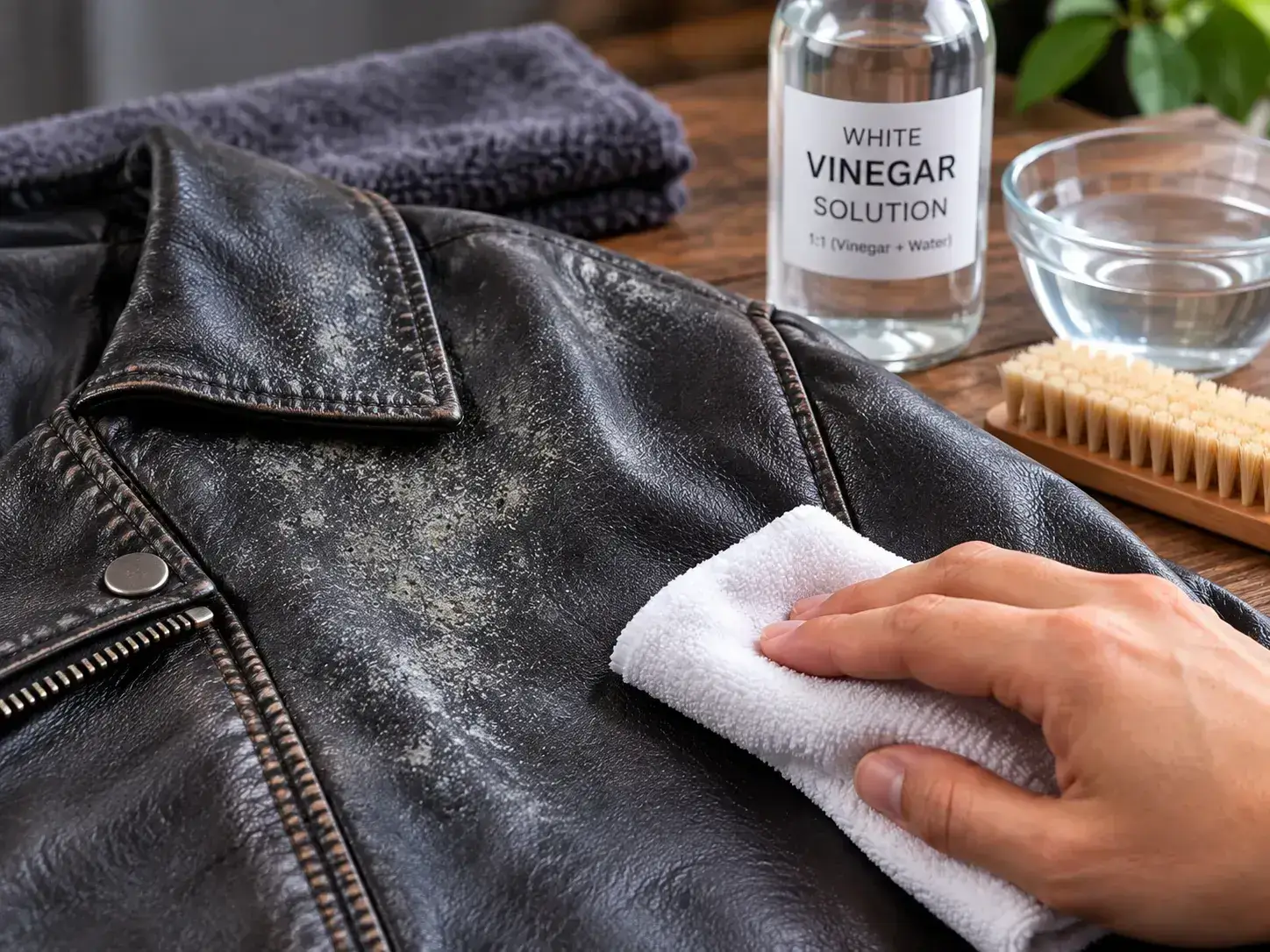
Before you begin cleaning, it’s worth confirming that you’re actually dealing with mold and not just dust or dirt. Mold usually appears as fuzzy or powdery spots in shades of white, green, gray, or black. It often comes with a strong musty smell that becomes noticeable as soon as you remove the jacket from storage.
If the mold covers most of the jacket or has spread into the inner lining, professional leather cleaning may be the safest option.
What You’ll Need Before Cleaning
Fortunately, removing light mold doesn’t require expensive equipment. Most of the supplies are already available at home.
You’ll need:
- A microfiber cloth
- A soft-bristle brush
- White vinegar
- Clean water
- Leather conditioner
- Rubber gloves
- A padded hanger
Avoid using bleach, ammonia, harsh detergents, or excessive water. These products can strip the leather’s natural oils and permanently damage the finish.
How We Recommend Cleaning Mold Off a Leather Jacket
Whenever a customer contacts us about mold, we always recommend taking a gentle approach. Leather isn’t like ordinary fabric—it should never be scrubbed aggressively or soaked in water.
Start by taking the jacket outdoors or into a well-ventilated space. This prevents mold spores from spreading throughout your home. Wear gloves and use a soft brush to gently remove any loose mold from the surface. Avoid brushing too hard because scratching the leather can be more difficult to repair than the mold itself.
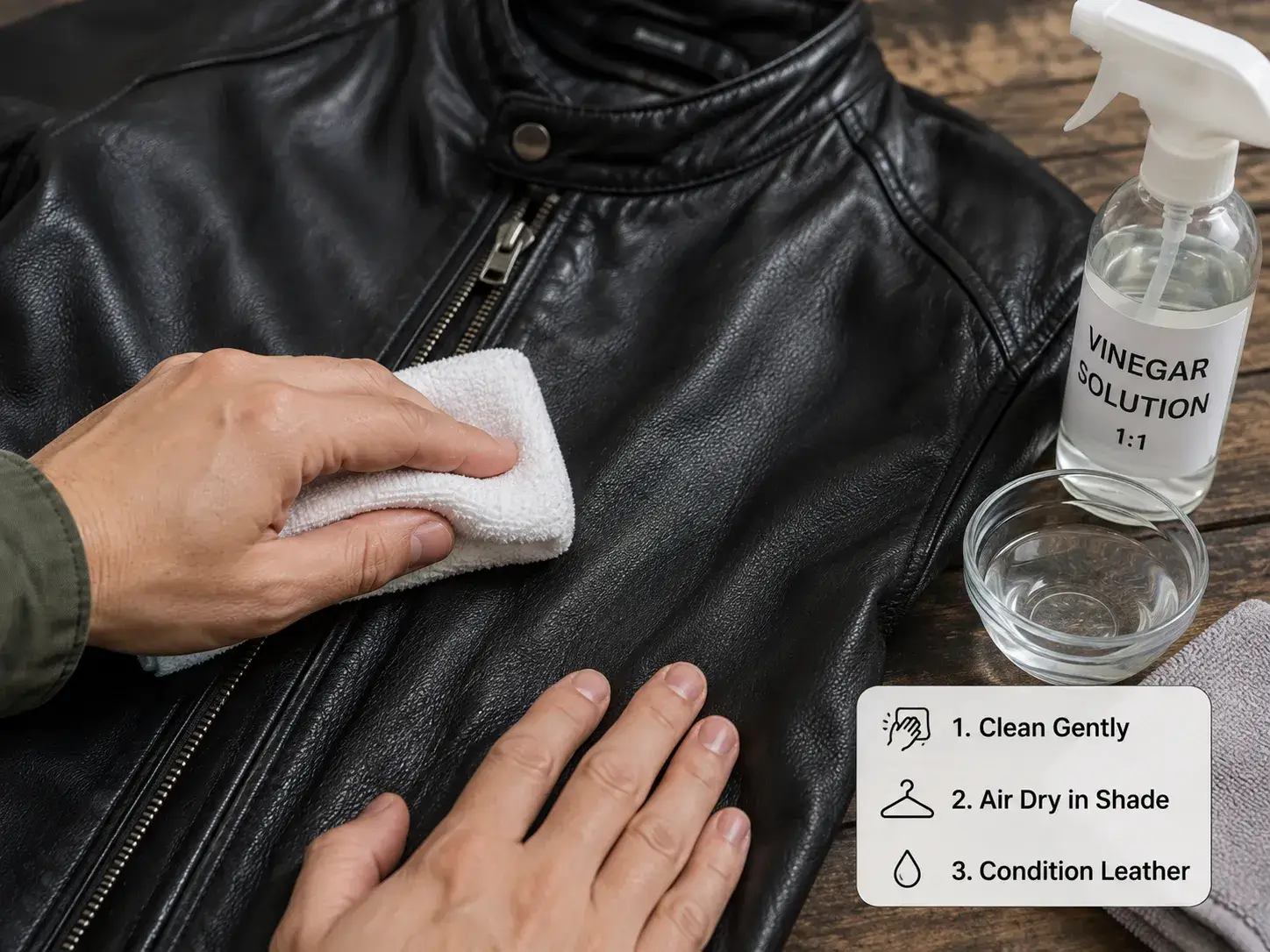
Next, prepare a simple cleaning solution by mixing equal parts white vinegar and clean water. Dampen a microfiber cloth with the solution and gently wipe the affected areas. Work slowly, cleaning small sections at a time instead of saturating the leather. The goal is to lift the mold while keeping the leather as dry as possible.
Once you’ve finished cleaning, hang the jacket on a wide padded hanger and allow it to air dry naturally in a shaded area with good airflow. Avoid direct sunlight, heaters, or hair dryers, as rapid drying can cause the leather to stiffen or crack.
After the jacket has dried completely, apply a quality leather conditioner. Conditioning restores the natural oils that are removed during cleaning and helps keep the leather soft, flexible, and protected.
Removing the Musty Smell
Even after the mold has disappeared, many jackets retain a lingering odor. This is completely normal and doesn’t necessarily mean mold is still present.
We usually recommend allowing the jacket to air out in a shaded outdoor area for several hours. If the smell persists, place the jacket in a breathable garment bag with an open container of baking soda or activated charcoal nearby. These naturally absorb odors without exposing the leather to unnecessary chemicals.
Avoid masking the smell with perfumes or fabric sprays, as they can stain the leather and often make the odor worse over time.
What We Recommend Avoiding
Many online cleaning hacks suggest products that can do more harm than good. As leather specialists, we’ve seen jackets permanently damaged by harsh chemicals that could have been avoided.
Never use:
- Bleach
- Ammonia
- Washing machines
- Steam cleaners
- Strong household detergents
- Excessive amounts of water
If you’re unsure whether a product is safe, always test it on a hidden area first or consult a leather care professional.
What We’ve Learned About Preventing Mold
Over the years, we’ve found that preventing mold is much easier than removing it. Most mold problems can be avoided with a few simple storage habits.
We recommend storing leather jackets in a cool, dry wardrobe using breathable cotton garment bags instead of plastic covers. Make sure the jacket is completely dry before hanging it up, especially after wearing it in rainy weather. Leaving enough space between clothes also helps improve airflow and reduces trapped humidity.
To keep your leather jacket in excellent condition:
- Store it in a cool, dry place.
- Use breathable garment bags.
- Never store it while damp.
- Keep humidity below 50% whenever possible.
- Use silica gel packets during humid seasons.
- Condition the leather every few months.
These small habits can significantly extend the life of your leather jacket.
When Professional Cleaning Is the Better Choice
While surface mold can often be removed at home, there are situations where professional cleaning is the safest option. If the mold has spread deep into the lining, covers most of the jacket, or if your jacket is made from suede or nubuck, it’s best to let an experienced leather care specialist handle the restoration.
Trying to aggressively clean delicate leather can sometimes cause more damage than the mold itself.
Continue Learning About Leather Jacket Care
As leather jacket manufacturers and sellers, we believe that helping our customers doesn’t stop after they make a purchase. Proper care is what keeps a premium leather jacket looking great for years, and that’s why we’ve created detailed guides covering every aspect of leather maintenance.
You may also find these articles helpful:
- How to Take Care of a Leather Jacket
- How to Remove Wrinkles from a Leather Jacket
- How to Tell If a Leather Jacket Is Genuine
- Everything You Need to Know Before Buying a Leather Jacket
- Why Handmade Leather Jackets Are Worth It
- Leather Jacket Size & Fit Guide for Men and Women
Together, these guides will help you protect your investment and enjoy your leather jacket for many years to come.
Frequently Asked Questions
Can I use vinegar to clean mold off a leather jacket?
Yes. A solution made with equal parts white vinegar and water is generally safe for most finished leather when used carefully. Always test it on a hidden area first and apply a leather conditioner after cleaning.
Can mold permanently damage a leather jacket?
If left untreated, mold can stain the leather, weaken its fibers, and create unpleasant odors. However, light surface mold can often be removed successfully when addressed early.
Can I wash a leather jacket with mold in a washing machine?
No. Washing machines expose leather to excessive moisture and agitation, which can cause shrinking, cracking, and permanent damage. Leather jackets should always be cleaned by hand using gentle methods.
How can I stop mold from coming back?
Store your jacket in a cool, dry place, use a breathable garment bag, ensure it’s completely dry before storage, and maintain good airflow in your closet. In humid climates, silica gel packets or a dehumidifier can help keep moisture levels under control.
Conclusion
Mold on a leather jacket can be alarming, but it doesn’t have to mean the end of your favorite piece. With the right cleaning method, proper drying, and regular conditioning, most surface mold can be removed safely without harming genuine leather.
As leather jacket makers and sellers, our goal is not only to create high-quality jackets but also to help our customers care for them long after purchase. By following the steps in this guide and practicing good storage habits, you’ll protect your investment and keep your leather jacket looking its best for years to come.