
How to Tell If a Leather Jacket Is Real

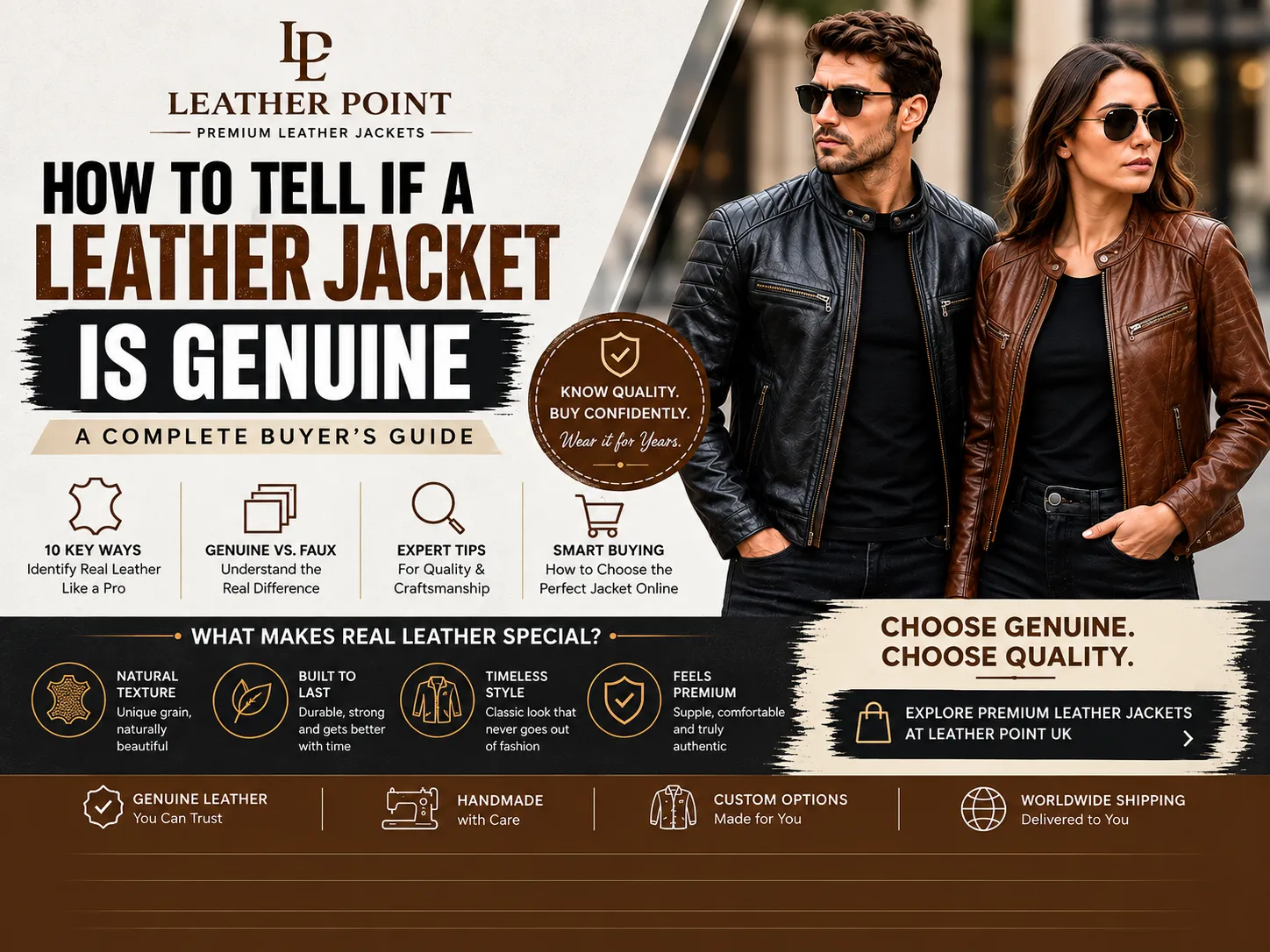
As leather jacket manufacturers and sellers, one of the questions customers ask us most often is how to tell whether a leather jacket is real. With so many synthetic and faux leather jackets available today, it can be difficult to identify genuine leather simply by looking at a product photograph or reading a product description.
A genuine leather jacket offers a different combination of texture, durability, breathability, and natural character. However, not every jacket labeled as “leather” is made from genuine animal hide. In this guide, we’ll explain the practical signs we recommend customers look for when buying a real leather jacket, whether you’re considering a classic leather jacket, biker jacket, motorcycle jacket, leather coat, aviator jacket, or vintage style.
Check the Leather Label
The first place we recommend checking is the product label. Genuine leather products should clearly state the material used. Look for terms such as genuine leather, full-grain leather, top-grain leather, or real leather.
Be careful with descriptions such as “leather look,” “leather finish,” “vegan leather,” or “PU leather.” These generally refer to synthetic or alternative materials rather than traditional animal leather.
A reliable manufacturer should also be transparent about the leather type and construction instead of using vague descriptions.
Examine the Natural Texture
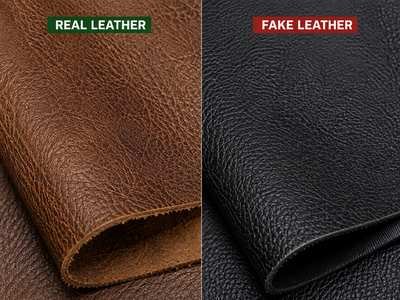
Real leather usually has a natural grain pattern with small variations across the surface. Genuine hides are not perfectly uniform, so you may notice subtle differences in texture, pores, wrinkles, and grain.
Synthetic leather is often manufactured with a repeated pattern designed to imitate natural grain. If the texture looks perfectly identical across every section, it may be a sign that the material is artificial.
This doesn’t mean that every smooth-looking jacket is fake. Some genuine leather is heavily finished or corrected, so texture should be considered alongside other signs.
Feel the Leather
Touch is another useful way to identify genuine leather. Real leather generally feels flexible, soft, and slightly warm rather than completely smooth and plastic-like.
When you gently press genuine leather with your fingers, it may develop small wrinkles or changes in the grain. The material tends to move naturally because it is made from hide.
Faux leather can feel more uniform and sometimes has a slightly plastic or rubbery sensation. However, modern synthetic materials can be very convincing, so touch alone should not be treated as definitive proof.
Look at the Edges
The edges of a leather jacket can provide useful information about the material. Genuine leather has a fibrous structure because it comes from animal hide. If an unfinished edge is visible, you may notice layers of natural fibers rather than a perfectly smooth plastic edge.
Synthetic leather is commonly produced with a fabric or synthetic backing underneath its surface. This can sometimes be visible around seams, cut edges, or unfinished sections.
We don’t recommend cutting a jacket to perform this test. Instead, inspect areas where the construction naturally exposes an edge.
Check the Smell
One of the traditional ways to distinguish genuine leather from synthetic materials is by its smell. Real leather usually has a distinctive natural leather aroma, while synthetic leather can have a stronger plastic or chemical smell.
However, smell isn’t a completely reliable test. Finishes, dyes, adhesives, packaging, and conditioning products can change the scent of both genuine and synthetic jackets.
For this reason, we recommend using smell as one clue rather than making a purchasing decision based on it alone.
Look at the Price and Construction
Price can provide another clue, but it shouldn’t be the only factor. Genuine leather generally costs more to produce because the material, tanning, cutting, stitching, and finishing require additional processing.
When examining a jacket, look beyond the price and inspect the overall construction. A quality leather jacket should have consistent stitching, properly finished seams, strong hardware, and a well-constructed lining.
As manufacturers, we pay close attention to these details because the quality of a leather jacket isn’t determined by the hide alone. Construction and craftsmanship have a major effect on durability and appearance.
Check the Product Description Carefully
When shopping online, the product description is particularly important. A trustworthy seller should provide clear information about the leather rather than simply describing the jacket as “premium” or “luxury.”
Before purchasing, look for information about:
- Leather type and grade
- Country of manufacture
- Lining material
- Hardware and zippers
- Jacket construction
- Care instructions
- Available sizes and measurements
If a seller avoids explaining what material the jacket is made from, it’s worth asking questions before placing an order.
Genuine Leather vs Faux Leather
The biggest difference between genuine and faux leather is the material itself. Genuine leather is made from animal hide, while faux leather is manufactured from synthetic materials, commonly polyurethane or PVC.
A real leather jacket can develop a unique patina and character as it ages. With proper care, quality leather can remain durable for many years. Faux leather can still be attractive and affordable, but it generally has different aging and durability characteristics.
Neither option is automatically right for everyone. The important thing is knowing what you’re buying and ensuring the product description accurately represents the material.
Different Types of Real Leather
Not all genuine leather jackets are made from the same type of leather. When customers ask us about quality, we usually explain that leather grade, finishing, thickness, and construction all matter.
Full-grain leather retains most of the natural grain and is known for durability and character. Top-grain leather is also genuine leather but may undergo surface treatment to create a more uniform appearance. Other leather types can have different textures, finishes, and characteristics.
For example, a smooth biker jacket may have a different finish from a soft suede jacket, while an aviator jacket may use a heavier leather or a combination of leather and shearling-style materials.
Don’t Rely on One Test
One of the most important things we tell customers is not to rely on a single test. A smell test, texture test, price, or label alone cannot always confirm whether a jacket is genuine.
Instead, consider several factors together. Check the material description, texture, construction, edges, smell, stitching, and reputation of the seller. If you’re purchasing online, ask the manufacturer directly about the leather type and construction.
A transparent manufacturer should be comfortable explaining what goes into the jacket.
Our Advice as Leather Jacket Manufacturers
As manufacturers, we believe customers should know exactly what they’re purchasing. A genuine leather jacket is an investment, so understanding the material before buying can help you choose a product that matches your expectations.
Whether you’re looking for a men’s leather jacket, women’s leather jacket, biker jacket, motorcycle jacket, leather coat, aviator jacket, vintage jacket, or suede jacket, always look beyond the appearance. The leather type, craftsmanship, stitching, lining, hardware, and finishing all contribute to the final quality.
Most importantly, buy from a seller who provides clear and honest information about the product.
More Leather Jacket Guides
If you’re interested in learning more about leather jackets, we’ve created several other guides to help you choose and care for your jacket:
- [How to Get Wrinkles Out of a Leather Jacket] — Learn safe ways to reduce wrinkles and creases without damaging genuine leather.
- [How to Clean Mold Off Leather Jacket] — Find out how to remove mold and prevent it from returning.
- [How to Take Care of a Leather Jacket] — Discover practical leather cleaning, conditioning, and storage tips.
- [Everything You Need to Know Before Buying a Leather Jacket] — Learn about leather types, fit, construction, quality, and important factors to consider.
- [Why Handmade Leather Jackets Are Worth It] — Discover the value of craftsmanship and carefully made leather garments.
- [Leather Jacket Size & Fit Guide for Men and Women] — Learn how your leather jacket should fit across the shoulders, chest, sleeves, and waist.
Conclusion
Knowing how to tell if a leather jacket is real becomes much easier when you know what to look for. Natural grain, flexible texture, leather aroma, fibrous edges, quality construction, and transparent product information can all help you identify genuine leather.
However, no single test is perfect. As a manufacturer, we recommend looking at the complete picture and buying from a reputable seller that clearly explains its materials and construction.
A genuine leather jacket is more than just its outer material. The leather quality, craftsmanship, stitching, hardware, lining, and finishing all work together to determine how the jacket looks, feels, and performs over time.
Frequently Asked Questions
How can I tell if a leather jacket is genuine?
Check the material label, natural grain, texture, edges, smell, and overall construction. Genuine leather usually has natural variations and a flexible feel, but it’s best to use several signs together rather than relying on one test.
Does real leather have a smell?
Yes. Genuine leather generally has a natural leather aroma. However, smell alone isn’t a definitive test because dyes, finishes, adhesives, and conditioning products can affect the scent.
Is genuine leather better than faux leather?
Genuine leather generally offers natural character, durability, and the ability to develop a patina over time. Faux leather can be more affordable and may offer a consistent appearance. The better choice depends on your budget, preferences, and intended use.
What is the best leather for a leather jacket?
There isn’t one best leather for every jacket. Full-grain and top-grain leather are popular choices for durable jackets, while suede offers a softer, textured appearance. The ideal option depends on the jacket style, intended use, desired finish, and budget.